
Hello, I finished Persona 4 recently after 75 hours or so of gameplay and loved it. I’ve been trying to write more and wanted to write something about the game, but seeing as how Persona 4 is already a pretty well beloved game and you really don’t need me to recommend it to you, I decided to do something a bit different from a review and instead mostly talk about why I liked this game so much.
There is a term that gets tossed around a bit when talking about video games called “ludonarrative dissonance”. The idea is that in games there is often a conflict between the narrative and themes of the story versus the what the player is actually doing in the gameplay. In particular the idea is that the actual gameplay of the game undermines its own narrative. For instance in Grand Theft Auto IV, the narrative would have you believe that Niko Bellic doesn’t really want to get involved in a life of crime, but is gradually dragged into a mire of crime and violence by events and poor decisions. This is undermined by the fact that the actual gameplay loop is the same as every other GTA game and you act like a total maniac from the beginning. I have developed a pretty high tolerance for luddonarrative dissonance over the years out of necessity, but when I see a game where the gameplay and narrative are in sync I admire that, and very few games I have ever played do this as well as Persona 4
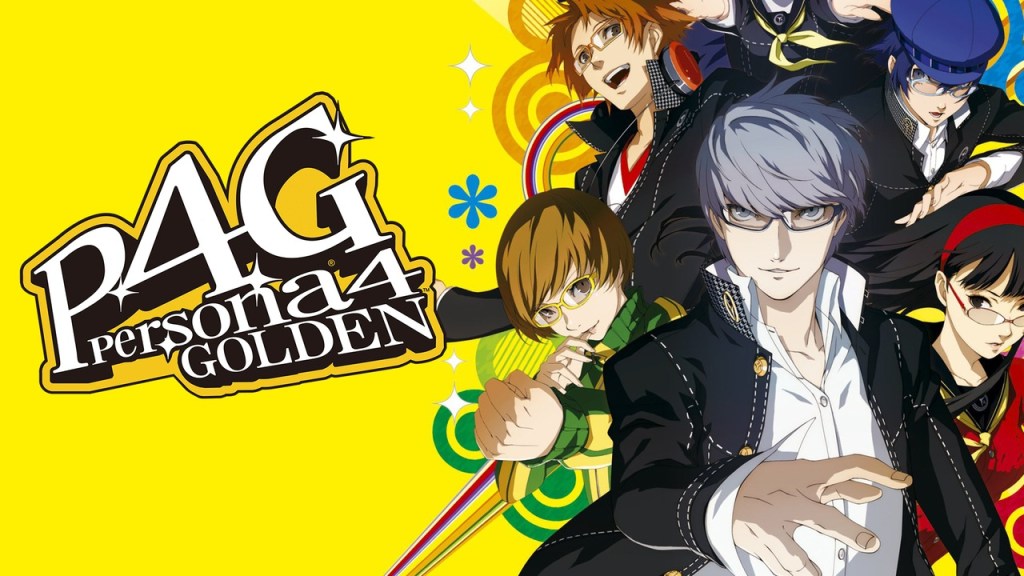
The plot of Persona 4 begins when you, the archetypical silent protagonist move into the small Japanese town of Inaba to live with your uncle and cousin for a year. In Inaba there is an urban legend about the “Midnight Channel”, a special TV channel which can only be seen at midnight on a rainy evening. Soon after you arrive two grizzly murders occur and both the victims were seen on this mysterious channel prior to their deaths. You and your friends discover that the “Midnight Channel” is a window into a parallel world full of shadows which can be reached by going through the TV screen. and that the murderer is killing his victims by tossing them through the TV and letting the shadows kill them. The heroes must journey into the TV world to rescue any potential victims from these shadows and discover who is doing all of this.
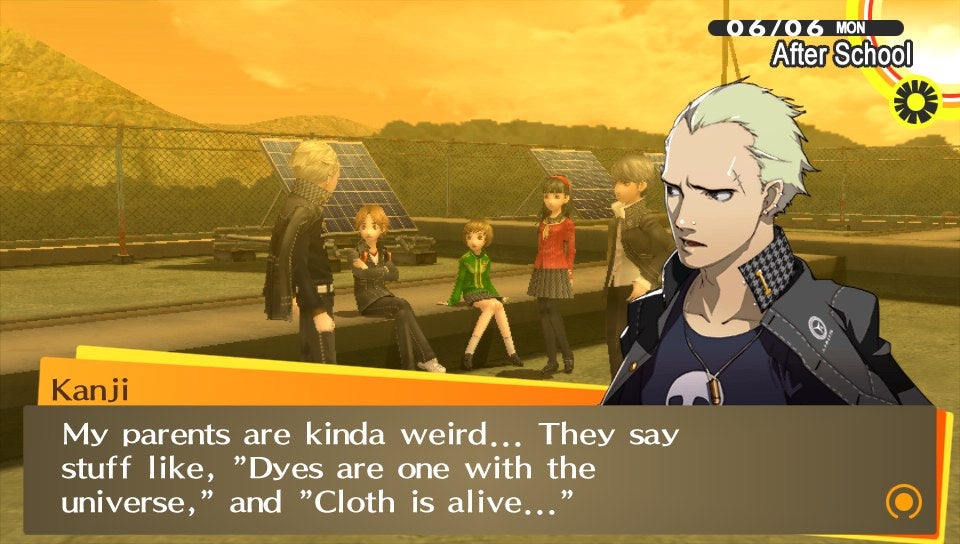
The gameplay of Persona 4 is divided into two halves. Most of the time you are just a regular high school student going through his day to day life in the manner of an RPG or more particularly one of those dating sims that are so popular in Japan. You go to class and then after school each day you have some free time to hang out with friends, do part time jobs or participate in after school activity, with most of these tying into the main gameplay mechanic of this part of the game the “Social Link” system. The idea with this is that all of these other characters you interact with have their own personal issues and as you become their friend you help them deal with their problems and grow as a person. For instance one of your party members is Kanji, who is your standard macho delinquent with a heart of gold, but he has a bunch of stereotypical feminine interests like sewing, which he keeps hidden for fear of seeming unmanly. As you build your relationship with him you can help him overcome this internal conflict, reconcile the two sides of his personality and accept who he is.
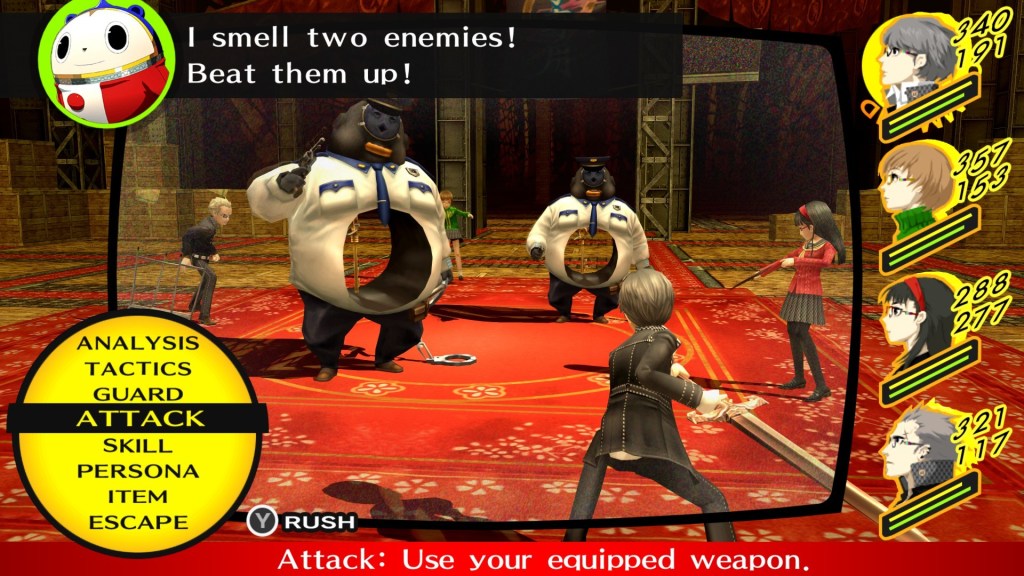
The other half of the game is when you journey through the TV and go through a series of semi randomized dungeons full of shadows. The way you fight these shadows is through something called “Personas”. A “Persona” is manifestations of your own personality in the form of a mythical creature or being which you can summon to fight and defend against the shadows. While most characters in the game have only the one “Persona” they can use, the protagonist is a bit of a blank slate and has the ability to manifest multiple “Personas”. The easiest way to understand “Personas” is that they are basically Pokemon, they are creatures with a variety of moves some of which are buffs or static attributes but are usually physical or elemental attacks and both the “Personas” and the different types of shadows all have their various elemental strengths and weaknesses and much of the strategy is knowing which “Persona” and move to use against what personality. Will these “Personas” can level up a bit on their own and you can acquire new “Personas” through combat, the real way to build up your own strength is by fusing different weaker “Personas” into newer stronger ones. The way this ties into the social of the game is that each of the social links you develop is tied to a specific type of monster and the stronger that social relationship is, the stronger that monster will be
The logic of the game is that “Personas” are manifestations of your own personality, so by developing social relationships you can grow as a person and this emotional and psychic growth causes the “Personas” you create to become stronger. This is what I mean by saying that Persona 4 lacks ludonarrative dissonance and has harmony between gameplay and narrative. The basic theme of Persona is that by forming bonds with others you can achieve personal growth and overcome obstacles created by negativity. Each aspect of the core gameplay loop corresponds with an aspect of the theme. The shadows are literally personified negative emotions, fighting them is overcoming negativity and other obstacles, building up social links is forming bonds with other people and the ability to level up and create new and stronger “Personas” is the ability to grow as a person. Therefore when the plot and the various side narratives advance it causes a corresponding growth of the players strength in the gameplay, which in turn allows you to beat your enemies and advance the plot, which creates a virtuous cycle where advances in one aspect of the game lead to advances in the other, creating a perfect harmony between gameplay and narrative.
It is this aspect which I think makes Persona 4 such a great JRPG, as not only does it have well written plot and characters and a deep and complex gameplay system which alone would have made it a very good JRPG, it also has this beautiful integration of narrative and gameplay into one harmonious whole which has rarely been matched in video games.
 Mr.Kltpzyxm's Games and Comics Blog