I have been a fan of animation as long as I can remember, ever since I watched Saturday morning cartoons on the A-Channel growing up in Canada. I never studied animation in any meaningful sense, but over the years I have picked up a few things about how cartoons are created and how they work. Having more free time due to the current Covid related unpleasantness, I have begun to read more and more books and articles on the history of animation and I have watched more and more of the classic theatrical shorts from the so called “Golden Age of Animation”.
I have also been trying to do some more writing and so I decided to combine my two present interests by writing about animation. When I write I like to have some sort of structure to build around, so I have decided to talk about the winners and nominees of the Academy Awards for best animated short films for each year starting from the beginning very. Examining the Oscar lists year by year, allows you to really see how the field of animation changed and evolved. Moreover since the Academy Awards are supposed to represent the best of what the film industry has to offer we can get a better sense of what contemporary Hollywood figures thought was the best in animation and so can better understand what they thought animation should be and how their ideals changed over time. I should be clear that I am not even remotely an expert on the subject of animation history by even the most generous standards so take that in mind when reading this.
At the Ambassador Hotel in Los Angeles on November 18th, 1932, the Academy of Motion Picture Arts and Sciences handed out the 5th Academy Awards. In addition to the usual awards like best picture (won by “Grand Hotel”), these were the first awards which featured a category for animation under the title of “Short Subjects, Cartoons”, the name which the award would go by until the 1970’s. Three shorts were nominated: the Walt Disney produced “Mickey’s Orphans”, the Leon Schlesinger produced “It’s Got Me Again!” and the eventual winner Disney’s “Flowers and Trees”.
Directed by Burt Gillett, “Mickey’s Orphans” begins in a low key manner at Christmas time. Inside a cozy house during a snow storm everyone is getting ready for the holidays with Mickey decorating the tree, Minnie playing Silent Night on the Organ and Pluto sleeping before the fire. Meanwhile a shawled woman drops off a basket on the door step and when Mickey brings the basket in he finds it contains a bunch of kitten and mischief ensures as the kitties run wild and destroy the house.
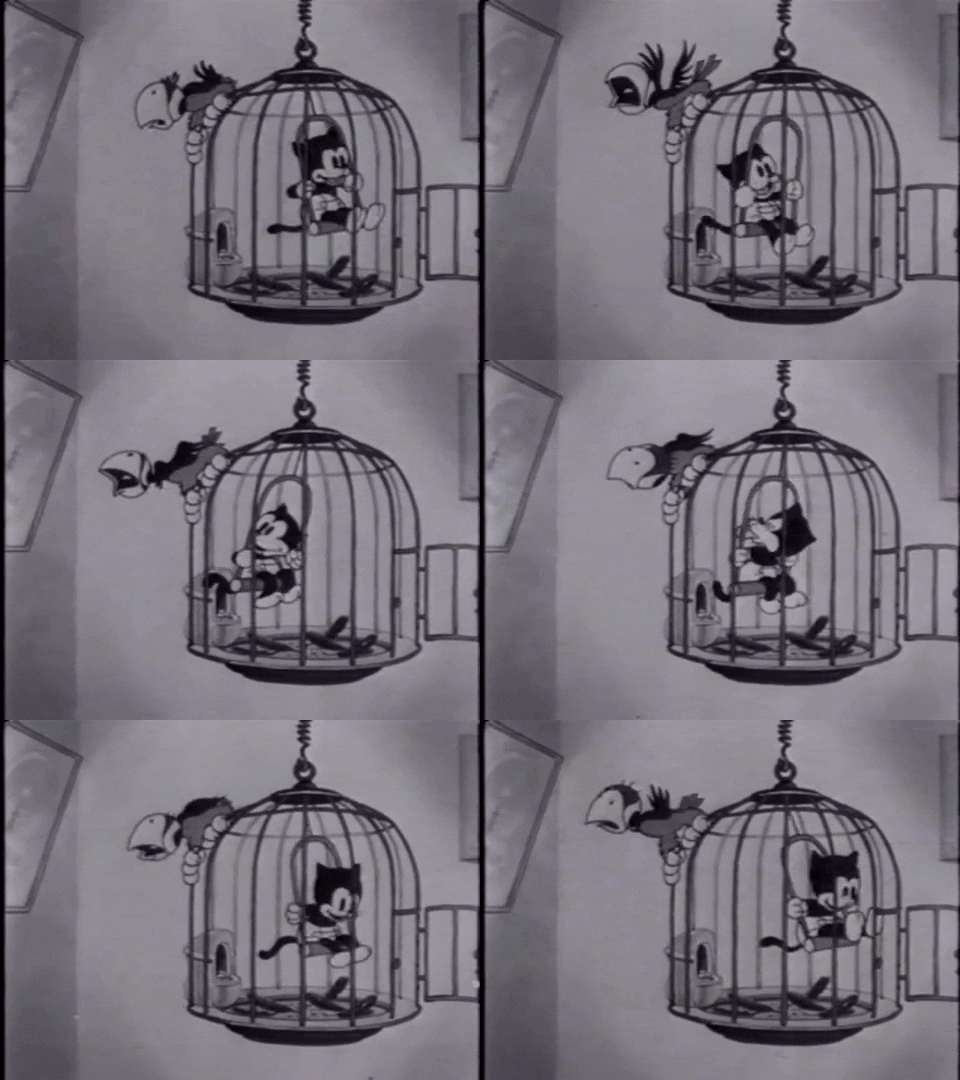
This is a cartoon where I think the whole is less than the sum of its parts. There is the initial christmasy set up, but after that the cartoon descends into a series of gags, a kitten kicks out their pet parrot from its cage and its swing and one group grabs Pluto by his ears while a second group grabs him by his tail and they use the dog as a rope to play tug of war.
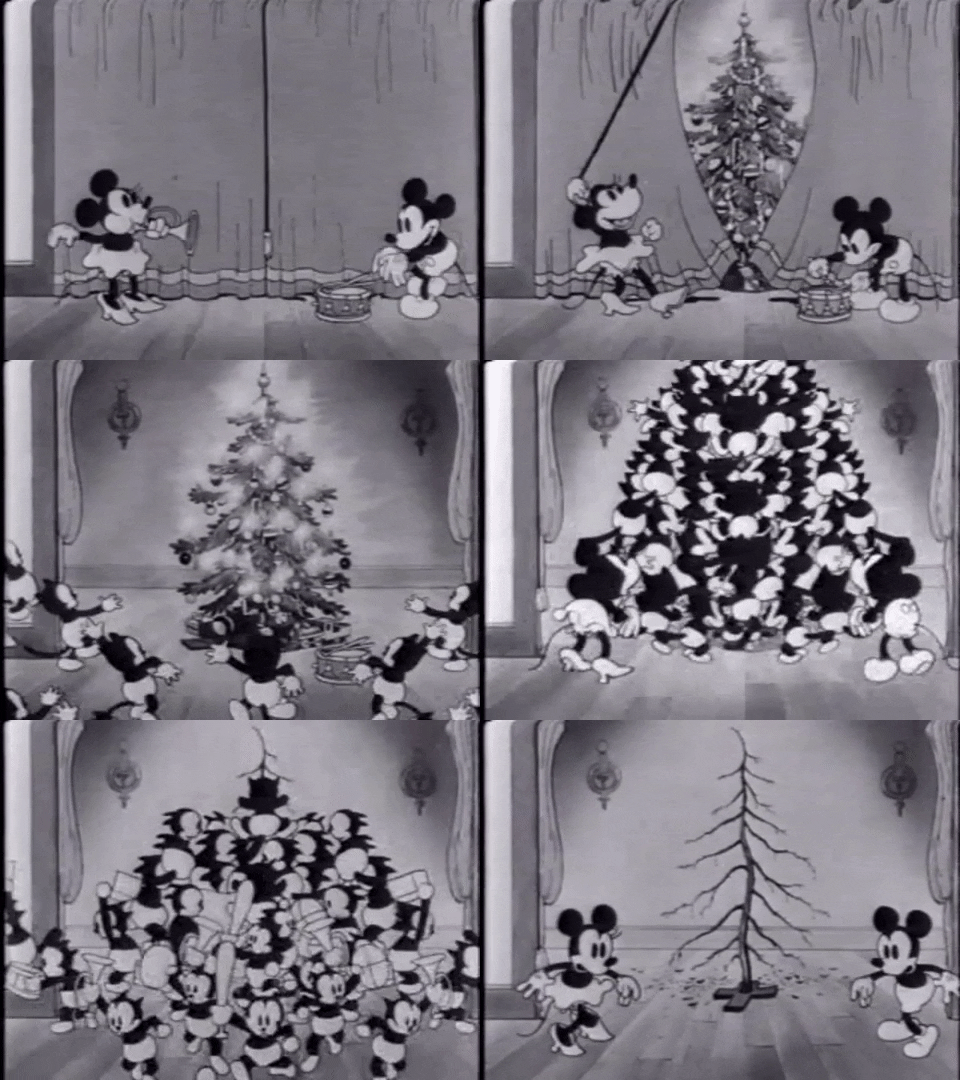
The individual gags are well animated and fun enough, but they don’t really go anywhere. There is real arch to the story, no development, the cats misbehave and Mickey just stands there smiling like a doofus. The only real advancement of the plot is when Mickey comes in dressed as Santa Clause and gives the kittens toys. But that only leads to further escalation, they destroy furniture with saws and hammers, shoot out windows and break china with pop guns and pour hot coals down Mickey’s pants. Finally culminating when Mickey unveils the Christmas tree and the kittens swarm it like a hoard of locusts stripping it bare.
I am having problems figuring out my feelings about this cartoon, I think it’s fine, but it just feels underwhelming for some reason. I gave a bunch of reasons why that may be so, but I don’t really believe them myself as I like plenty of cartoons which are just an escalating series of gags leading to violence. Especially because the gags are fairly memorable, in part because of how uncharacteristically destructive they are for a Disney cartoon.
“Its got me again” is a very early Merrie Melodies cartoon by the Harman and Ising team which does a lot of the same things that the Mickey Mouse cartoon does, but nowhere near as well. The animation is stiff and while there are a few good set pieces, it ends up being pretty mediocre. The story is that a bunch of very Mickey Mouse looking mice in a musical instrument store come out after dark and have themselves a party. A cat comes along and spoils their fun, until the mice team up and chase the cat out.
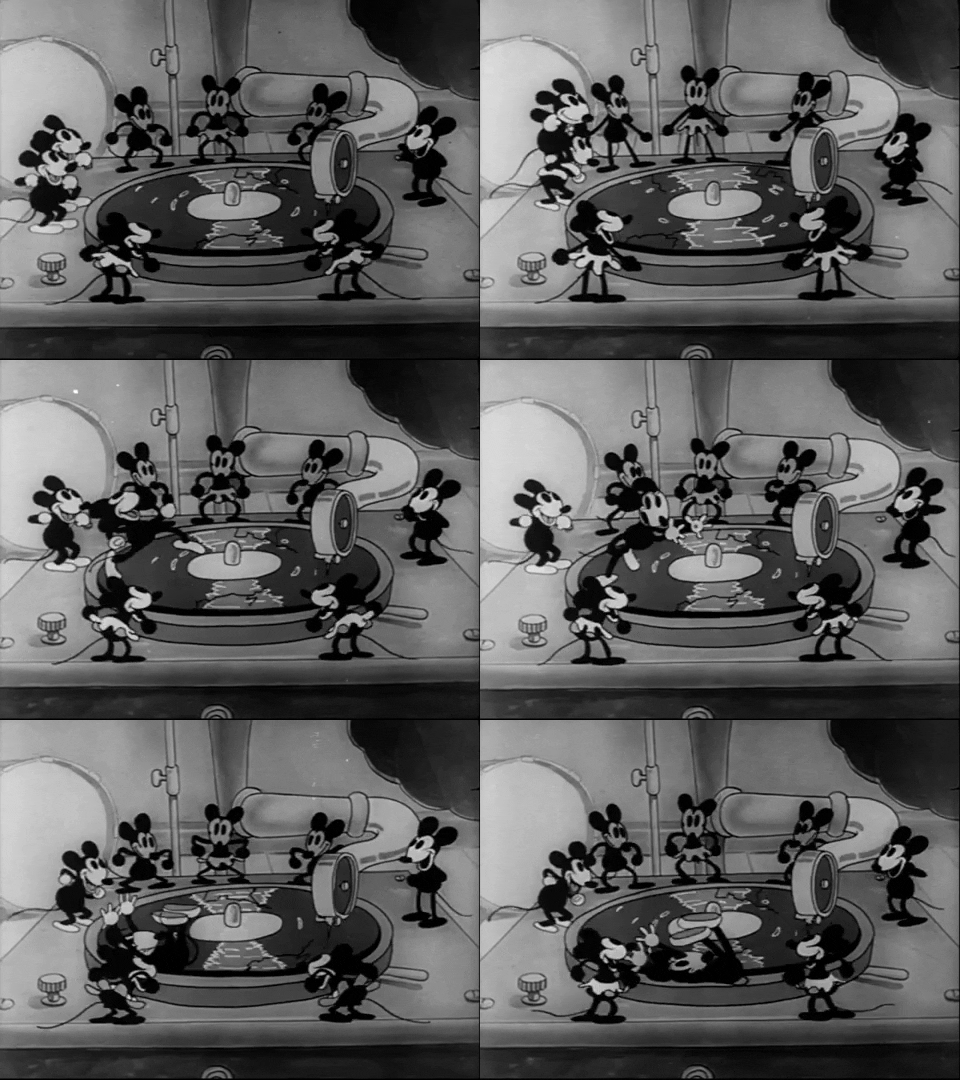
Like the Mickey Mouse cartoon this is mostly just a series of gags of the mice either having fun or fighting back at the cat. There are some good bits like the mice dancing on a running turntable, but most of them fall flat. The animation is a bit stiff and every joke feels like it lasts about a second or two too long. I really don’t have that much too say about it. Its not good and it isn’t bad in any interesting way, just kind of mediocre and forgettable. Really surprised that this got nominated.
Directed by Burt Gillett, “Flowers and Trees” is set in a typical Disney type forest full of cute anthropomorphic animals and plants waking up to a new day. The plot focuses two young trees in love, whose courtship is interrupted by a jealous gnarled tree who makes a play for the girl and after being rejected, attempts to burn the entire forest to the ground. In the end the fire is put out by the woodland critters and the only thing burnt to a crisp is the villain himself, while the young couple end up getting married.
The cartoon is balanced between the main dramatic character animation of the three trees and the more gag based antics of the woodland critters which keep the story from getting too dry. The cartoon has no dialogue and the main strength of this short is the character animation which carries the entire burden of conveying the character and motivations of the main characters. With the male tree, there is just something about the way he is animated. He seems like nice eager young lad and there is just such a such pure enthusiasm for love and life in the way he is animated. The standout example is when to impress the girl he forms a makeshift harp from another tree and plays a tune. Not only is the animation of the finger work impressive, but the tree puts his entire back into it and every part of him moves to play the instrument.
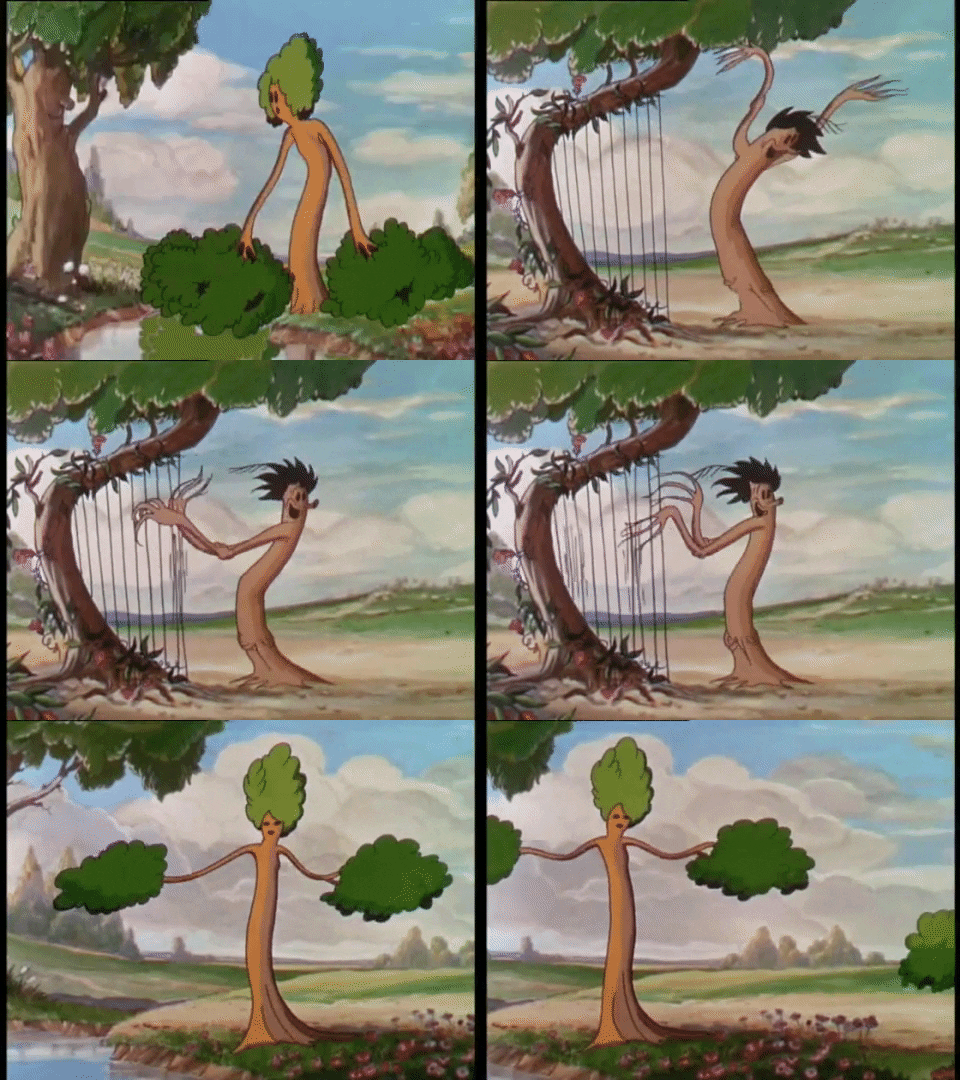
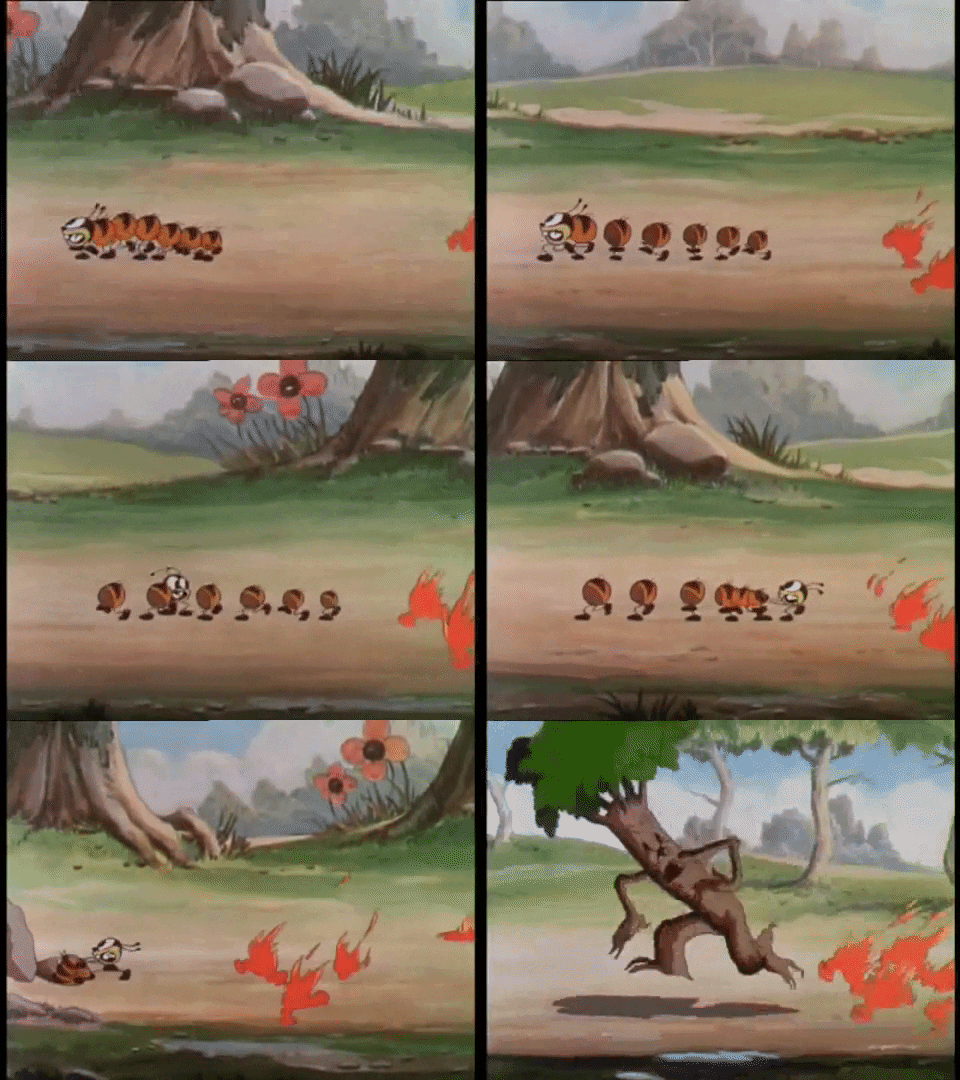
The female tree is likewise very expressive and fluid in her movements. While the fellow plays his harp, she is dancing back and forth to the music and for an oversized hunk of wood the way she swings and sways is very feminine, animation succeeding at making you believe that a tree of all things is a young girl in love. In contrast to all this, the antagonist tree lacks the fluidity of the other two and the animation in his movement is more jerky and ugly. Which works as as the rigidity and ugliness of his animation seems to reveal how ugly and rigid the tree’s own soul is and by merely a glance at the way he walks, even a child can tell right away that he’s bad news.
The detailed character animation is balanced out by the various gag animations which go on at the beginning of the cartoon and in between dramatic scenes. While there are a few gags I found to be funny; the bit where the catepillar is trying to escape the fire and is going so fast that his segments fall behind and he has to slow down to let them catch up is a highlight, most are not that funny thought still pretty cute.
This is definitely the best cartoon of the bunch, but the thing is that when I watched is the for the first time it was as part of a batch with the other Silly Symphony winners of the 1930’s and I think this may be the weakest of the bunch. Or at the very least it doesn’t rise to the height of “The Old Mill” or “The Ugly Duckling”. Which is an unfair comparison, but when I watched this there was just something I found lacking.
But, in the end “Flowers and Trees” was still a massive leap forward not only in the field of animation, but arguably in the field of cinema in general as Walt Disney was really one of the great innovators in Hollywood’s adoption of colour. Which I think goes along way to justifying the creation of an award for best cartoon that year. The point of the Oscars is to recognize greatness in the cinematic arts and to recognize advancements in the science of film and by giving the award to “Flowers and Trees” in a way Hollywood is recognizing that like any other genre of movie Animation is a living art form which has the ability to grow and evolve.
 Mr.Kltpzyxm's Games and Comics Blog